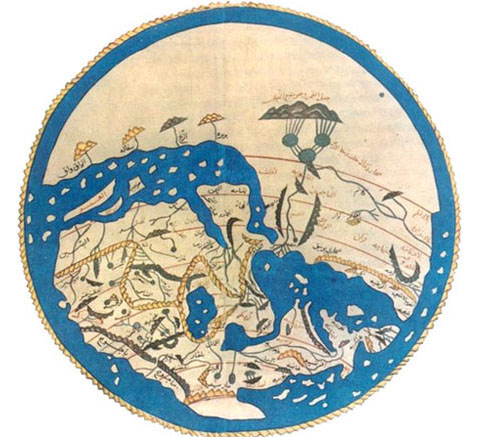
“Reading Armenian Manuscripts”
Mediterranean Studies Summer Skills Seminar
29 June — 2 July 2026 • Remote
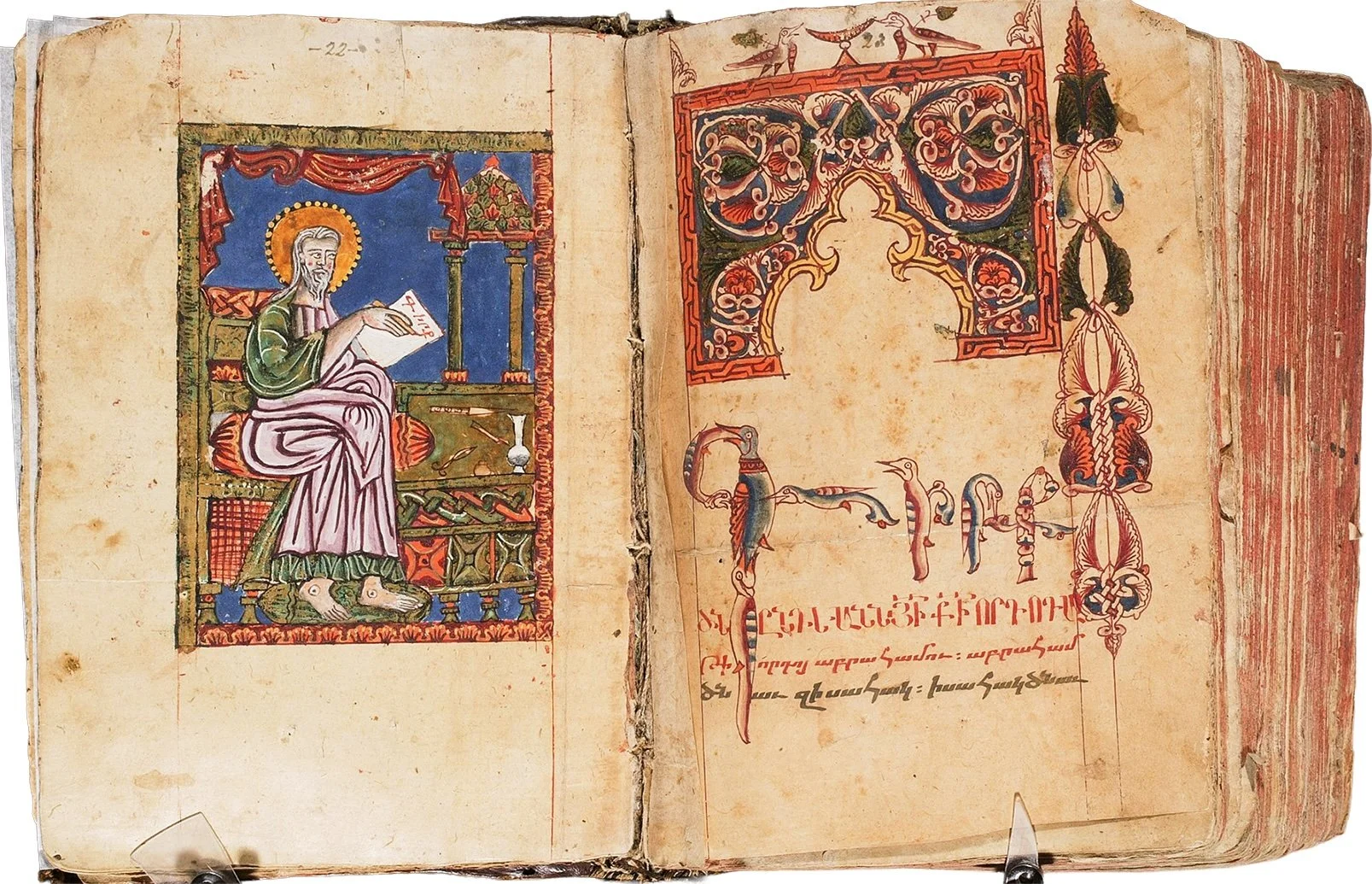
The Summer Skills Seminar, “Reading Armenian Manuscripts” will be held via Zoom from Monday, 29 June to Thursday 2 Juoly from 10am to noon and 1pm to 3pm MDT.
REGULAR REGISTRATION UNTIL 26 APRIL
APPLY HERE
Course overview
From the fifth century CE onward, Armenian writing has spanned an incredible geographic and cultural scope. This intensive and introductory course guides participants to decipher medieval and early modern Armenian manuscripts, running a textual gamut from the work of professional scribes at the Cilician chancellery to the marginal notes of monastic readers, hard pressed for candles (and eyesight); from the personal correspondence of travelers, far from home, to equally well-traveled romances in the worldly vernacular. Through a combination of small-pair and group work, participants will acquire the paleographic skills to accurately read and describe handwritten texts in the Armenian script -- a massive corpus that includes works not only in Classical, Middle, dialectal, and modern Armenian, but other languages as well, such as Turkish (Armeno-Turkish) and Persian (Armeno-Persian).
We will focus on the primary Armenian scripts, taking some minor detours through the riches of epigraphy, zoomorphic writing, early printing, and modern handwriting along the way. Short lectures will add cultural and historical context, introducing common features in manuscript culture such as colophons, pictographic abbreviations, and the Armenian calendrical system, alongside lesser-known scribal practices.
This seminar is held on Zoom over four days, with two two-hour sessions per day, and is open to undergraduate and graduate students, postdoctoral fellows, professors, librarians, and learners at any stage of life. Basic reading knowledge of Armenian (Classical or modern) is required; course texts may be modified based on student request and interest. Students will also gain familiarity with important reference works on Armenian language, paleography, manuscript culture, literature, and other subjects, as well as experience finding and reading digitized Armenian manuscripts online.
Finally, participants will receive a certificate which may be listed on a CV and other documents, such as grant applications, upon completion of the course.
Faculty
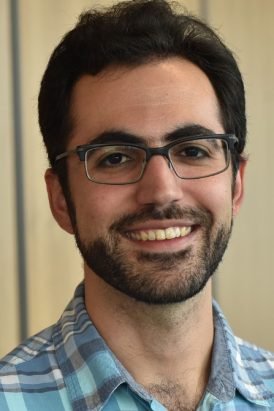
Michael Pifer is Marie Manoogian Professor of Armenian Language and Literature at the University of Michigan, Ann Arbor, and Assistant Professor of Middle East Studies. His research seeks to situate medieval Armenian language and literary history within broader contexts of multilingualism and cultural exchange. He is a team member of the European Research Council funded project, Armenia Entangled: Connectivity and Cultural Encounters in Medieval Eurasia, 9th - 14th Centuries, based in Florence. Pifer is the author of Kindred Voices: A Literary History of Medieval Anatolia (Yale University Press, 2021) and the co-editor of the volume An Armenian Mediterranean: Words and Worlds in Motion (Palgrave Macmillan, 2018). He has previously taught courses in Classical Armenian at the Hill Museum and Manuscript Library, Fresno State, and the University of Michigan.
Prerequisites and preparation
Basic reading knowledge of Armenian (Classical or modern) is required.
Application & Information
The regular application period is until April 26.
There is an application deposit of $100USD or €100. This will be refunded when course payment is made.
Late applications will be accepted if there is availability and will be subject to a late fee.
If you are not accepted your application deposit will be refunded.
Applicants will be advised of acceptance by May 1. Payment is due on 15 May. Applicants waiting on a grant or subvention should contact us without delay to make arrangements.
Late applicants may be accommodated if space remains. For late applicants full payment will be due within three days of acceptance, including a $75 surcharge for late applications, or be subject to an additional fee.
All payments are final and non-refundable. A letter of confirmation/ receipt will be provided by the Mediterranean Seminar, together with a certificate of completion once the course has concluded.
NOTE: Numbers are limited; participants are encouraged to apply early.
Fees
There has been no increase in fees for 2026
• $1100 for Full Professors, Librarians & Professionals
• $825 for tenured Associates, Emerita/us, Retired Faculty, Independent Scholars & Non-Academics;
• $575 for non-tenured Associates and Assistants, Postdoctoral Fellows & Graduate and Undergraduate students;
• $400 for Adjuncts, Lecturers & Contingent faculty.
Limited reductions are offered to applicants who are (1) nationals; (2) current residents; (3) AND faculty or students in low-per-capita GDP countries may apply for a reduction (the Low-GDP Bursary program).
Payment information will be provided at the time of acceptance. Posted fees do not include a 5% processing fee.
How do we determine our fees?
Why have our fees gone up
Can I get a reduction in fees?
What is the low-GDP Bursary program?
Proposed Program
Monday, 29 June 2026
10am to noon and 1pm to 3pm
1: Introduction to the Armenian scripts
2: The oldest Armenian writing
Tuesday, 30 June 2026
10am to noon and 1pm to 3pm
1: Professional scribes and the Cilician chancellery
2: An orientation to monastic scribal culture
Wednesday, 1 July 2026
10am to noon and 1pm to 3pm
1: A portfolio of Early Modern Armenian writing
2: From the manuscript to early printed book
Thursday, 2 July 2026
10am to noon and 1pm to 3pm
1: Epigraphic interludes (and other writing modes)
2: Modern handwriting
Please note: Sessions are subject to change due to student interest / request. If there is something in particular you wish to be covered, please write to mpifer@umich.edu in advance of the course.
Important dates:
Application period: 26 April 2026
Acceptance/stand by notifications: 5 May 2026
Full payment: 12 May 2026 (subject to extension for late applicants/ or pending grants)
NOTE: Numbers are limited; participants are encouraged to apply early.
Information
For general information regarding fees, enrollment, and administrative matters, contact the Mediterranean Seminar; for questions regarding seminar content and materials, contact the instructor directly.