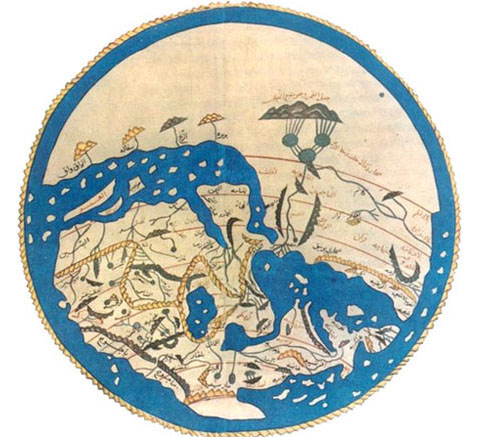
“Reading Ottoman Turkish”
Mediterranean Studies Summer Skills Seminar
15—18 June 2026 • Remote

The Summer Skills Seminar, “Reading Ottoman Turkish” will be held via Zoom from Monday, 15 June to Thursday, 18 June 2026 from 10am to noon and 1pm to 3pm MDT.
REGULAR REGISTRATION UNTIL 26 APRIL
APPLY HERE
Course overview
This Summer Skills Course will introduce participants to the Ottoman language, it’s alphabet, calligraphic styles, basic grammar and structure, as well as an overview of changes over time. The course will focus on primary sources often used by historians and the paleographic challenges they present. This seminar is designed for academics, particularly graduate students, postdocs, and professors working in disciplines such as history, literature, and religious studies who have interest in Ottoman history and literature but have not been exposed to the language. Participants should have at least one year of Modern Turkish and preferably some knowledge of either Arabic or Persian. Students with strong Arabic or Persian but little to no Turkish are also welcome to apply. This is an introductory course with historians interested in venturing into Ottoman history. Thus, attention will be paid to the ways that linguistic paleographical skills can enhance diverse forms of research and teaching. Participants will receive a completion certificate which may be listed on a CV and on other documents such as grant/fellowship applications. The seminar is held via Zoom over four days, with two two-hour sessions each day. Participants are invited to prepare readings in advance of the sessions, which will be a blend of lecture and group-work.
For almost six hundred years, the Ottomans ruled most of the Balkans and the Middle East. From their bases in Anatolia, Ottoman armies advanced into the Balkans, Syria, Egypt, and Iraq, constantly challenging the borders of neighboring European and Islamicate empires. By the end of the seventeenth century, Constantinople, Jerusalem, Cairo, Baghdad, Sarejevo, Budapest, and nearly Vienna came under Ottoman rule. As the empire expanded into Europe and the Middle East, a central part of Ottoman life was connected to the emergence, consolidation, transformation and use of the Turkish language. This course offers an introduction to Ottoman Turkish, providing an intro level course to the language and a brief overview of Ottoman paleography. By the end of the course, the student will be able to read basic texts in print, recognize different paleographic styles and types of documents, as well as understand how and what dictionary to use for different types of texts. The course is suitable for students with knowledge of Turkish and/or Persian and Arabic, with an interest in Ottoman Turkish but no prior knowledge.
The course will be divided into four sections. The first section will focus on learning the alphabet and recognizing basic vocabulary. The second section will focus on examples of changes between Ottoman and modern Turkish. The third section will focus on the different paleographic styles and the most common types of documents historians might encounter. The last section will provide a short history of Ottoman language with examples.
The goal of this course is to introduce participants’ printed and handwritten Ottoman texts in their research and teaching and provide them with a bona fide (in the form of a certificate of completion for those who attend the full seminar), which may be advantageous in securing funding for research and travel. This course is designed as an introduction that will allow students to continue their training either independently or through intensive courses that require some knowledge of Ottoman.
Faculty
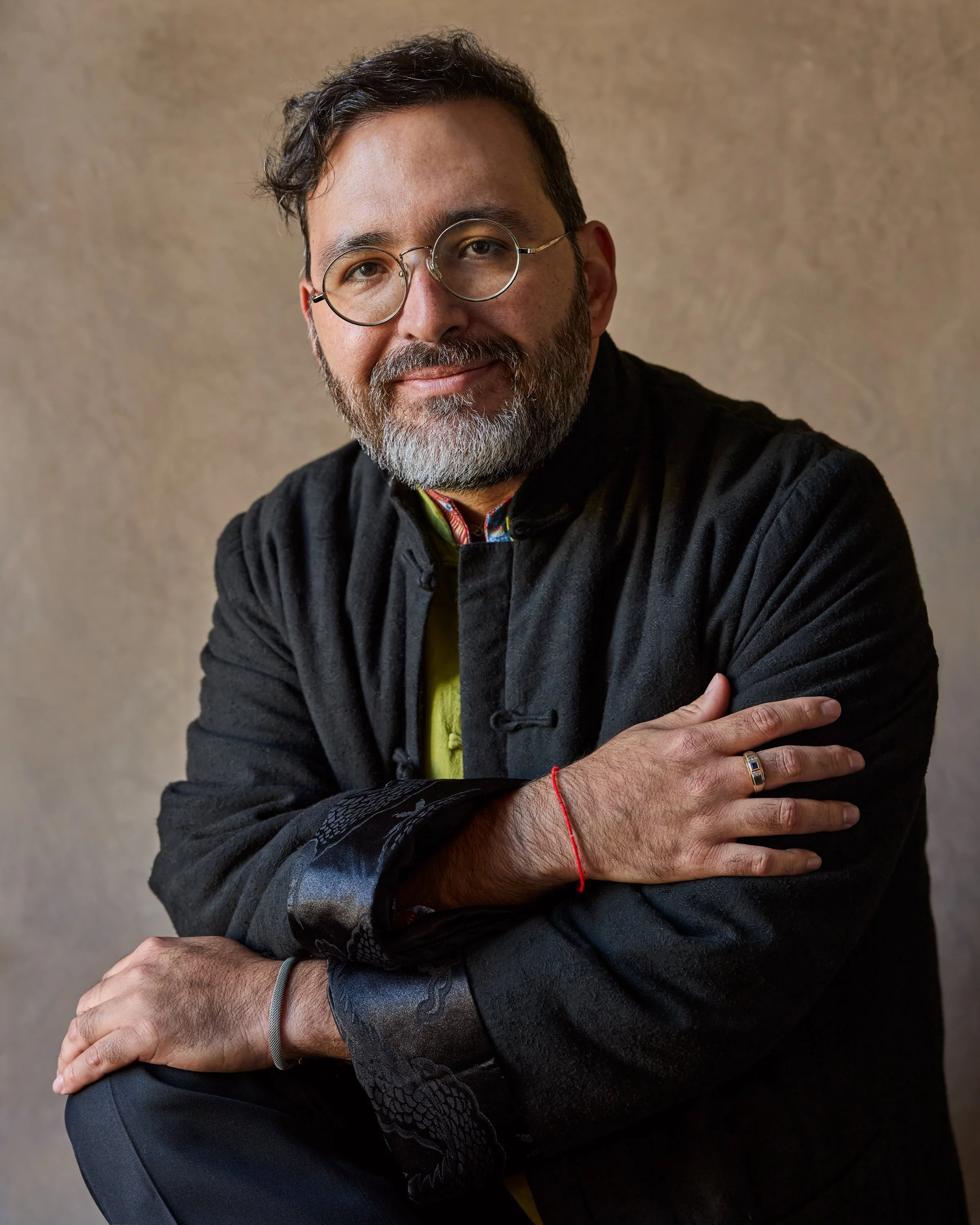
Prof. Oscar Aguirre Mandujano (University of Pennsylvania, Department of History) is a historian of the early modern Ottoman world. His research focuses on intellectual and cultural history and its connections to literature, poetry, and bureaucracy. His current book project, A Sea of Gossip: Truth and Imagination in the Early Modern Mediterranean, is a history of various forms of informal exchange of information that today we refer to as gossip, anecdote, or rumor, as they shaped and transformed the early modern Mediterranean. His first monograph, Occasions for Poetry: Politics, Literature and Imagination Among the Early Modern Ottomans (Philadelphia: The University of Pennsylvania Press, 2025), is a history of how Turkish poetry became the preferred mode for communicating, debating, and shaping the Ottoman political and social experience after the conquest of Constantinople in 1453.
Aguirre-Mandujano completed his Ph.D. at the University of Washington. He also holds a BA in History from the National Autonomous University of Mexico (UNAM) and an MA in Historical Research Methods from the School of Oriental and African Studies (SOAS), University of London. He is co-organizer of the Baki Project, a Digital Humanities project that aims to develop new digital tools for the study of Ottoman manuscripts. He is also co-editor with Kerem Tınaz (Koç University) of the volume Sephardic Trajectories: Archives, Objects, and the Ottoman Jewish Past in the United States (Koç University Press, 2021).
Prerequisites and preparation
Reading of Turkish and/or Persian and Arabic; no prior knowledge of Ottoman Turkish necessary. The language of instruction is English.
Application & Information
The regular application period is until April 26.
There is an application deposit of $100USD or €100. This will be refunded when course payment is made.
Late applications will be accepted if there is availability and will be subject to a late fee.
If you are not accepted your application deposit will be refunded.
Applicants will be advised of acceptance by May 1. Payment is due on 15 May. Applicants waiting on a grant or subvention should contact us without delay to make arrangements.
Late applicants may be accommodated if space remains. For late applicants full payment will be due within three days of acceptance, including a $75 surcharge for late applications, or be subject to an additional fee.
All payments are final and non-refundable. A letter of confirmation/ receipt will be provided by the Mediterranean Seminar, together with a certificate of completion once the course has concluded.
NOTE: Numbers are limited; participants are encouraged to apply early.
Fees
There has been no increase in fees for 2026
• $1100 for Full Professors, Librarians & Professionals
• $825 for tenured Associates, Emerita/us, Retired Faculty, Independent Scholars & Non-Academics;
• $575 for non-tenured Associates and Assistants, Postdoctoral Fellows & Graduate and Undergraduate students;
• $400 for Adjuncts, Lecturers & Contingent faculty.
Limited reductions are offered to applicants who are (1) nationals; (2) current residents; (3) AND faculty or students in low-per-capita GDP countries may apply for a reduction (the Low-GDP Bursary program).
Payment information will be provided at the time of acceptance. Posted fees do not include a 5% processing fee.
How do we determine our fees?
Why have our fees gone up
Can I get a reduction in fees?
What is the low-GDP Bursary program?
Proposed Program
Monday, 15 June 2026
10am to noon and 1pm to 3pm
1. Introductions. Basics & Alphabet, Reading Mechanics.
Welcome. Course overview.. Basic terminology. Learning to Read among the Ottomans.. Practice didactic Ottoman printed texts..
2. Dictionaries, Encyclopedias, and Change over Time.
Focus on available dictionaries and reference works (both Ottoman and contemporary). Reading dictionaries as primary sources. Discussions of semantic change and how to avoid anachronisms.
Tuesday, 16 June 2026
10am to noon and 1pm to 3pm
3. XIX century.
Overview of xix century Ottoman handwriting. Sample texts. Standardization and paleographic skills.
4. Easy Scripts: xv-xix
Focus on clearer scripts. Common pitfalls and questions. Sample texts.
Wednesday, 17 June 2026
10am to noon and 1pm to 3pm
5. Practice Reading XIX century
Review of homework, trouble shooting one’s own reading. In-class review of other common texts and issues.
6. Practice reading easy scripts
Review of homework, common issues and mistakes. In-class review of similar texts.s.
Thursday, 18 June 2026
10am to noon and 1pm to 3pm
7. Focus on other manuscript scripts
Practice reading common scripts in manuscripts, including marginalia, colophons, and notes of ownership.
8. Reading diplomacy and bureaucracy.
Overview of scripts used in diplomatic and bureaucratic documents. Sample readings.
Important dates:
Application period: 26 April 2026
Acceptance/stand by notifications: 5 May 2026
Full payment: 12 May 2026 (subject to extension for late applicants/ or pending grants)
NOTE: Numbers are limited; participants are encouraged to apply early.
Information
For general information regarding fees, enrollment, and administrative matters, contact the Mediterranean Seminar; for questions regarding seminar content and materials, contact the instructor directly.