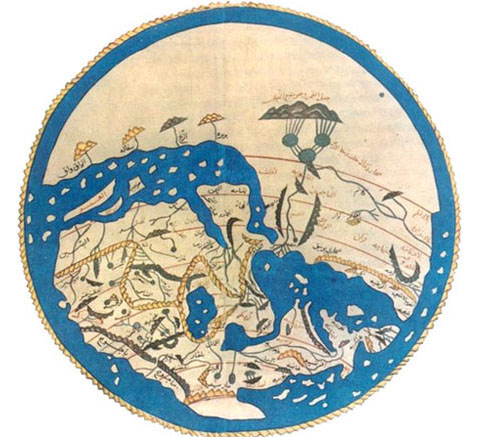
“Mediterranean Magic: An Introduction”
Mediterranean Studies Summer Skills Seminar
29 June — 2 July 2026 • Remote

The Summer Skills Seminar, “Mediterranean Magic: An Introduction” will be held via Zoom from Monday, 29 June to Thursday, 2 July 2026 from 10am to noon and 1pm to 3pm MDT.
EXTENDED REGISTRATION UNTIL JUNE 23
APPLY HERE
Course overview
This four-day intensive skills seminar will not only provide participants with an overview of magic’s history (broadly defined) throughout the premodern period but also introduce them to recurring patterns in contemporary magical practice and representation, significant symbols, and even tools for bringing similar material into their classrooms or personal reflections. As much as possible the content will be catered to participants interests and needs. Medievalists of all disciplines and ranks including independent scholars, qualified undergraduate students, graduate students, library and archival professionals, as well as modern magic practitioners or enthusiasts are encouraged to apply.
Participants will leave with a stronger grasp of magic’s significance in Mediterranean history (with an emphasis on the Iberian Peninsula), the ability to recognize important symbols, and a thirst for discovering further magical connections within their fields and interests. Hands-on sections will be dedicated to internalizing new symbols and patterns as well as developing strategies for classroom instruction and/or practice.
The first day is dedicated to conceptualizing magic. In the first section we will briefly introduce types of magic (benevolent/natural, divine, and maleficent) and how they manifested in the three main religions of the Iberian Peninsula (i.e. Christian, Jewish, and Muslim magic). This will lead us into a discussion on magic and the law as well as various translation efforts that sparked the continued spread of occult practices. Such translations lead to the spread of occult knowledge throughout Europe and Mediterranean. The second section will be more theoretical as we explore how in the Middle Ages and today magic is at the “crossroads” between many other fields of knowledge. What effect did this have then and now with “modernity”? We will also explore the “myth of disenchantment”, what is meant by “western esotericism” and how magic remains relevant today, albeit in different forms.
Since astrological knowledge was often the prerequisite for medieval magical usage, the second day will be entirely dedicated to this field of knowledge. What is astrology? How did it inform their Ptolemaic and Neoplatonic cosmology? How can we effectively teach aspects of this knowledge today? What are some astrological glyphs and what correspondences (primarily drawing on the Picatrix/Ghayāt al-Hakīm) did the celestial bodies have? As we discover these connections we will do some hands-on inferences and practice as we learn the language of the sky. We will also model gamified methods of instruction and creative uses of AI for further pedagogical applications. The second section will then provide an overview of how this knowledge was later used in concrete ways. We will explore astral magic and review some magical prologues further establishing the importance of mastering this discipline. We will close the day with one example of magic that deviates from this requirement with the more folk Morisco magic coupled with Inquisitorial fears of the spread of “suspicious” knowledge.
The third day brings us into the world of imagination and societal reflections. In the first section we will explore the way magic showed up in Mediterranean stories of miracles and movement like the story of Don Yllan. The second section will focus on fictional monsters and the marvelous where we will discuss examples of supernatural entities like jinn, automatons, and more. In order to apply some of the training from the previous day, we will also experiment with connecting some of the astrological symbols and references to their possible manifestations in fiction—setting aside, for purposes of this exercise, the intentions of the premodern authors.
The final day takes us out of fantasy and into the practical. We’ll start first with popular culture and modern ways some of these ideas remain present. What type of solutions did (and does) magic offer? Beyond planetary manipulation, how else could magicians effect change? How could their changes also occur internally? To answer these questions we will explore ways hermetic and neoplatonic thought influenced the quest for unity with creation. Here additional primary sources will be introduced. The second section will take us into a recap of the various networks magic created and explore ways we could visually represent this using digital tools like Knightlab. We will also hint at modern echoes, touristic cites, and contemporary practices like esoteric tarot all of which have premodern origins dependent on Mediterranean networks.
A reading list will be provided for each day with required and suggested sources.
Past participants said:
“We had a lot of conversations that were both particular to the course readings and also plenty of opportunities to have "spur trail" conversations. And we were invited to share our own interests.”
“The seminar has significantly enhanced my knowledge about magic and has provided me with new perspectives and resources (texts, authors, academic publications) that are invaluable for my research.”
“I want to thank Professor Menaldi once again for her dedication and for sharing her expertise with us. I look forward to applying what I've learned to my ongoing research!”
“Veronica put together an interesting and manageable reading list that (I think) hit a lot of good notes given the range of potential materials. She was also very energetic--and she did a good job helping to connect dots between our comments and the material. She also did a good job of both keeping us moving through the material and providing space for wide-ranging conversation, including inviting us to share resources and materials that individuals might have worked with. I also appreciated that she curated a wide range of material that we prepared for ahead of time, and that also we worked with on the spot. It was also fun incorporating modern practices into our conversations. Holding all that together for four hours a day on zoom is no small feat.”
“Professor Menaldi is greatly passionate about the topic of magic and she employed various strategies to keep seminar participants engaged. I loved her balance between lecturing and encouraging discussion among the participants.”
“This course provided an excellent base for the study of magic and magical practices in the medieval Mediterranean as well as several strong resources for further study.”
“Veronica was incredibly adaptable and was really attentive to our interests and comments. She was skilled at keeping the conversation and the sessions moving naturally, even in moments where we didn't have as many productive contributions, there was never a dull moment.”
“Veronica is an excellent educator, also the group dynamics were great.”
“I really enjoyed the readings that were selected for this course, which makes me all the more ready to dive into the recommended readings. Veronica really selected some thought-provoking pieces.”
“Veronica did an excellent job making an intensive online course dynamic and engaging, while not being overwhelming. I thought the readings were well balanced, and I enjoyed the thoughts about teaching as well.”
“Veronica was really good at facilitating discussion and incorporating our interests. She also provided a great selection of images and other quote selections (sometimes from recommended texts) to put in conversation with the assigned readings (which again were Excellent!).”
“Dr. Menaldi is very engaging and easy to listen to. We frequently had interesting and thought-provoking conversations as a group, and she thoughtfully interacted with all of us.”
“Dr. Menaldi was a great instructor, who helped foster constructive dialogue to enhance the experience. I will recommend this course for my peers, and look forward to a long relationship with the Mediterranean Seminar.”
Faculty
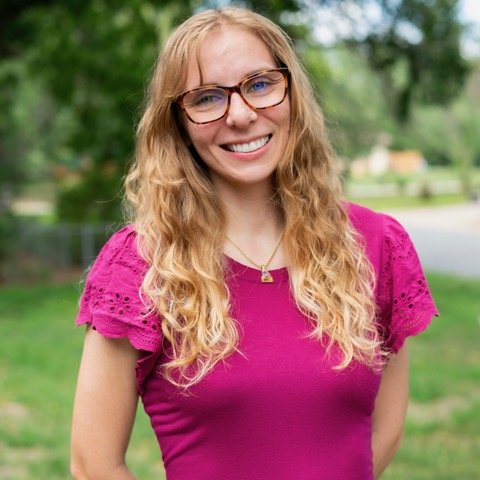
This course will be conducted by award-winning scholar and pedagogue Dr. Veronica Menaldi (PhD: University of Minnesota, 2018). She is a specialist of medieval and early modern cultural contact shaped by the occult and foodways linking Iberia with the Mediterranean and the Atlantic worlds. Her research focuses on Andalusi legacies and Morisco production in both fictional literature and cultural practices. This is reflected in the presentations, workshops, and guest lectures she has given at academic and popular venues, and in her many publications, notably her monograph Love Magic and Control in Premodern Iberian Literature (Routledge, 2021) and research articles published in venues like La Corónica Journal of Medieval Hispanic Languages, Literatures, and Cultures; Correspondences Journal for the Study of Esotericism; and Magic, Ritual, and Witchcraft Journal. Currently, an independent scholar based in Colorado and Vice President of the Societas Magica, she was previously an assistant professor of Spanish at the University of Mississippi. This is her third year teaching this Summer Skills Seminar and was also a graduate student participant in two Summer Skills Seminars (Aljamiado and Ladino/Judezmo).
Prerequisites and preparation
There are no prerequisites apart from an interest in magic, astrology, and occult science in both culture and literature. While many primary texts are in Spanish, Arabic, Hebrew, Galician-Portuguese and more, they will be discussed and available in English translation. Among other texts, for some background reading see Richard Kieckhefer, Magic in the Middle Ages; Jason Josephson Storm, The Myth of Disenchantment; and Sophie Page and Catherine Rider, The Routledge History of Medieval Magic.
Please note: sessions will not be recorded; synchronous attendance is required.
Application & Information
The regular application period is until April 26.
There is an application deposit of $100USD or €100. This will be refunded when course payment is made.
Late applications will be accepted if there is availability and will be subject to a late fee.
If you are not accepted your application deposit will be refunded.
Applicants will be advised of acceptance by May 1. Payment is due on 15 May. Applicants waiting on a grant or subvention should contact us without delay to make arrangements.
Late applicants may be accommodated if space remains. For late applicants full payment will be due within three days of acceptance, including a $75 surcharge for late applications, or be subject to an additional fee.
All payments are final and non-refundable. A letter of confirmation/ receipt will be provided by the Mediterranean Seminar, together with a certificate of completion once the course has concluded.
NOTE: Numbers are limited; participants are encouraged to apply early.
Fees
There has been no increase in fees for 2026
• $1100 for Full Professors, Librarians & Professionals
• $825 for tenured Associates, Emerita/us, Retired Faculty, Independent Scholars & Non-Academics;
• $575 for non-tenured Associates and Assistants, Postdoctoral Fellows & Graduate and Undergraduate students;
• $400 for Adjuncts, Lecturers & Contingent faculty.
Limited reductions are offered to applicants who are (1) nationals; (2) current residents; (3) AND faculty or students in low-per-capita GDP countries may apply for a reduction (the Low-GDP Bursary program).
Payment information will be provided at the time of acceptance. Posted fees do not include a 5% processing fee.
How do we determine our fees?
Why have our fees gone up?
Why are there sometimes supplementary charges?
Can I get a reduction in fees?
What is the low-GDP Bursary program?
Proposed Program
Monday, 29 June 2026: Magic and Theory
10am to noon and 1pm to 3pm
1. Defining Magic: Types of magic • Christian, Jewish, and Muslim magic • Translation Efforts
2. Theorizing Magic: Magic at the “Crossroads” • The “Myth of Disenchantment” • Understanding the “West”
Tuesday, 30 June 2026: Astrology Prerequisite
10am to noon and 1pm to 3pm
1. Lay of the Sky: Cosmology • Astrological Glyphs • Correspondences
2. Examples and Deviations: Astral Magic • Magical Prologues • Morisco Magic
Wednesday, 1 July 2026: Magic in Fiction
10am to noon and 1pm to 3pm
1. Miracles and Movement: Marian Interventions • Practitioners from Magical Cities
2. Marvels and Monsters: Legends of Greatness • Jinn and Automatons
Thursday, 2 July 2026: Magic in Practice
10am to noon and 1pm to 3pm
1. Continuities and Elevation: Popular Culture Connections • Premodern Theories of Unity
2. Travel, Tourism, and Tarot: Tracing Magic • Esoteric Tarot
Important dates:
Application period: 26 April 2026
Acceptance/stand by notifications: 5 May 2026
Full payment: 12 May 2026 (subject to extension for late applicants/ or pending grants)
NOTE: Numbers are limited; participants are encouraged to apply early.
Information
For general information regarding fees, enrollment, and administrative matters, contact the Mediterranean Seminar; for questions regarding seminar content and materials, contact the instructor directly